

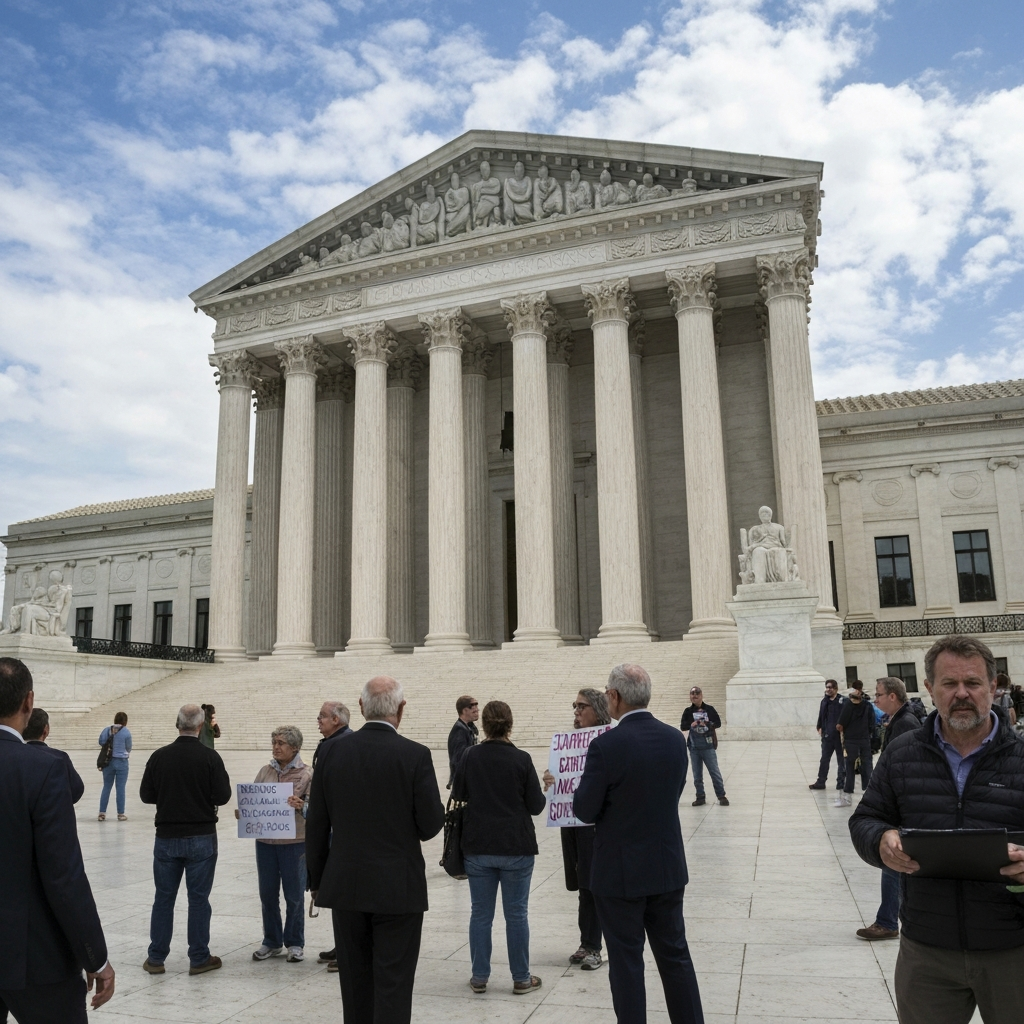
The Supreme Court recently delivered a pivotal ruling concerning Temporary Protected Status (TPS), a program that offers temporary legal status to individuals from countries experiencing armed conflict, natural disasters, or other extraordinary conditions. This decision has profound implications for many immigrants residing in the United States.
Background on Temporary Protected Status
Established in 1990, TPS allows individuals from designated countries to live and work in the U.S. without fear of deportation. The status is granted for set periods and can be extended based on the conditions in the home country. Over the years, TPS has provided a safe haven for thousands, including those from nations like El Salvador, Haiti, and Sudan.
The Supreme Court’s Ruling
In its recent decision, the Supreme Court addressed the eligibility criteria for TPS holders seeking permanent residency. The Court ruled that individuals who entered the U.S. unlawfully and later received TPS are not eligible to adjust their status to become lawful permanent residents. This interpretation hinges on the requirement that applicants must have been “inspected and admitted” into the country to qualify for permanent residency.
Implications of the Decision
This ruling affects a significant number of TPS holders who entered the U.S. without formal admission. Without a pathway to adjust their status, these individuals face uncertainty regarding their long-term residency in the country. Advocates express concern that this decision may lead to family separations and disrupt communities where TPS holders have established deep roots.
Local Impact in Ann Arbor
Ann Arbor, known for its diverse and inclusive community, is home to many immigrants who contribute to the city’s cultural and economic fabric. Organizations such as the Washtenaw Interfaith Coalition for Immigrant Rights (WICIR) have been at the forefront of supporting immigrant communities. In light of the Supreme Court’s decision, local advocacy groups are mobilizing to provide resources, legal assistance, and support to those affected.
Moving Forward
While the Supreme Court’s ruling presents challenges, it also underscores the importance of comprehensive immigration reform. Community members are encouraged to stay informed, support local organizations assisting immigrants, and engage in dialogues that promote understanding and inclusivity. As Ann Arbor continues to uphold its values of diversity and compassion, collective efforts can help navigate the complexities arising from this decision.