

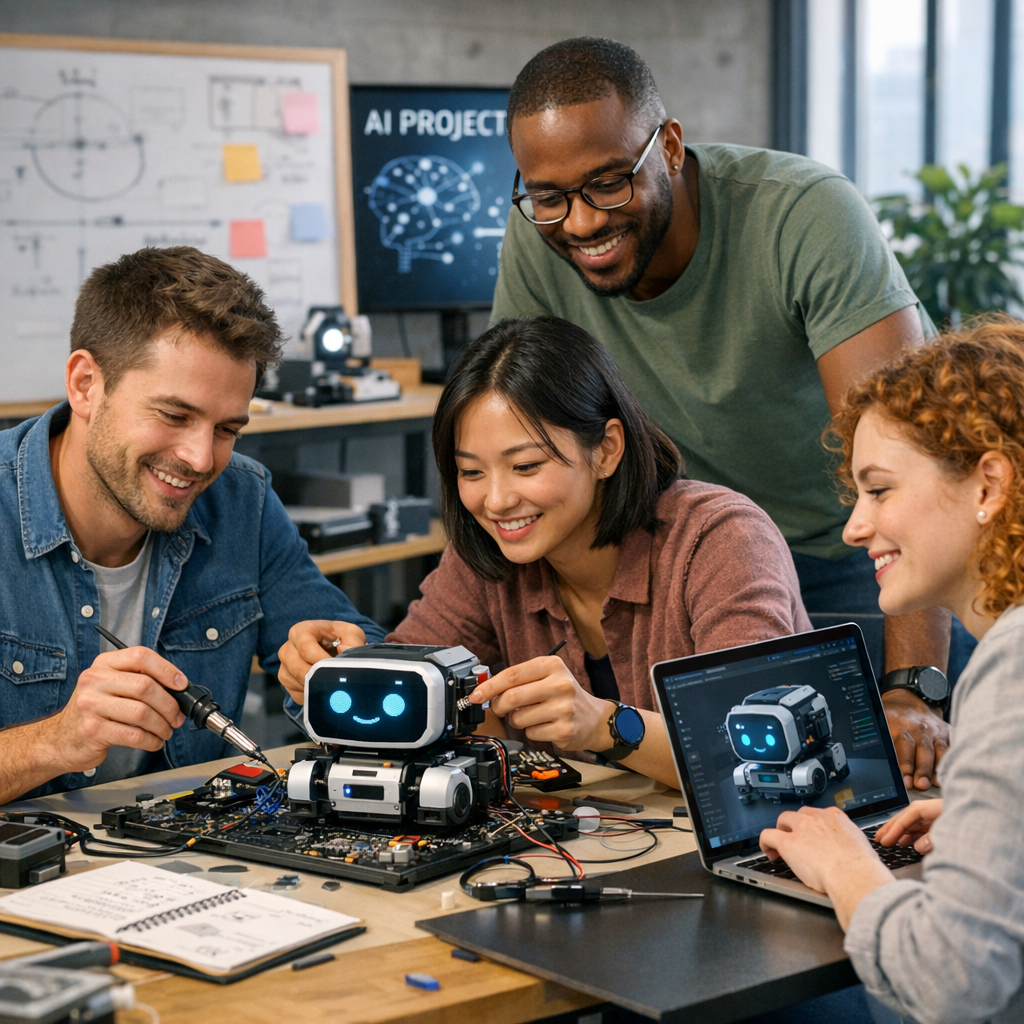
Ann Arbor has long been known for its strong tech culture—anchored by the University of Michigan, a thriving startup community, and frequent cross-pollination between academia and industry. In recent years, another layer has taken shape: artificial intelligence. More than just tools for big business, AI is now woven into everyday life in ways many locals may not recognize.
Local innovation that hits home
Several startups in and around Ann Arbor are using AI to tackle problems that touch daily routines:
- Transportation and mobility: Local companies like Refraction AI and Quantum Signal AI are applying machine learning to mobile robotics and transit challenges. Delivering packages, optimizing routes, and improving safety are just some areas where these advances show up in commuter and delivery services.
- Health monitoring and wellness: Innsightful is creating AI-powered devices meant to support mental health, while others use computer vision to observe movement and posture—helpful for workers whose jobs require physical strain or long hours at a desk. Invisible AI focuses on preventing injuries by analyzing how people move in workplaces.
- Biotech applications: Ann Arbor’s biotech entrepreneurs are pushing AI into genomics and life sciences. For example, some are mining genomic data to help clinicians better understand diseases, personalize treatment, and advance research in ways that could ultimately make medical care in our area more responsive and precise.
Everyday tech trends people are really using
Beyond startups, there are broader shifts in how people outside the tech world in Ann Arbor are experiencing AI through their gadgets and habits:
- Smart homes and interconnected devices: Devices that used to stand alone—smart speakers, lights, security cameras—are getting smarter, talking to each other, and anticipating what we’ll need. The trend is toward ecosystems rather than isolated gadgets.
- Wearables beyond fitness tracking: Smart rings, AI-assisted watches, and sensors are keeping tabs not just on steps, but stress, sleep quality, heart activity—and giving feedback, not just data.
- Shopping with AI help: Many people now rely on AI tools to compare products, find deals, or narrow choices before buying. While consumers tend to want control over final decisions, the assistance can shave time and reduce uncertainty.
What keeps people from embracing AI freely?
While there’s excitement, there’s also hesitation. Many Ann Arbor residents are curious but cautious. Some of the common concerns include:
- Trust and transparency: When gadgets make recommendations or monitor behavior, people often want to know how decisions are made, where their data goes, and what assumptions the system relies on.
- Cost vs. value: Upgrading or buying devices with advanced AI features may not feel worth it unless those features clearly improve daily life—especially when regular gadgets already serve basic needs.
- Lack of awareness: Sometimes AI-enabled choices or features are buried in menus, or people simply don’t know what’s possible or what to look for. This means many local users may only be using a fraction of what their devices can do.
How Ann Arbor can lead the way
With the mix of university research, startup energy, and a community that values both innovation and quality of life, Ann Arbor is well-positioned to help shape how AI becomes a positive force in everyday life. Here are some ways to make that happen:
- Support local startups developing tools for wellness, mobility, and sustainability—things people touch every day.
- Encourage open, accessible education—workshops, public tech forums, and library programs—to demystify AI technologies.
- Promote ethical design and data privacy—local companies that lead in these areas may earn more community trust and long-term adoption.
- Push for tech that works across devices and systems, so what you own in Ann Arbor doesn’t remain limited or isolated.
For many people, AI doesn’t have to mean robots or sci-fi—just small shifts that smooth out routines, give better feedback, make homes safer, or make health a little more manageable. As local inventors and larger brands aim to build tools that feel helpful instead of gimmicky, what matters most is whether we feel like technology is truly improving everyday life.